Business unit guided buying is rapidly transforming how organizations manage their procurement processes, giving departments the freedom to purchase while keeping spending aligned with corporate policy. If you’ve ever wondered how companies maintain control over decentralized purchasing without slowing down the teams that actually need the products and services, guided buying for business units is the answer. This comprehensive guide breaks down everything you need to know — from the foundational concepts to advanced strategies that drive measurable savings and compliance.

What Is BU Guided Buying?
BU guided buying refers to a procurement strategy where business units are empowered to make purchases through structured, policy-enforced workflows embedded within their procurement platforms. Unlike traditional purchasing models where every requisition funnels through a centralized procurement team, guided buying allows departments to operate with autonomy — but within tightly defined guardrails. These guardrails include approved vendor catalogs, spending thresholds, preferred supplier agreements, and automated approval chains that activate based on the nature and value of the purchase.
In practical terms, guided purchasing for business units acts as a digital procurement assistant, steering buyers toward compliant, cost-effective decisions without requiring manual intervention from a central purchasing office. This approach sits at the intersection of strategic sourcing and decentralized procurement, balancing speed and control in ways that legacy methods simply cannot replicate.
How BU Guided Buying Works in Practice
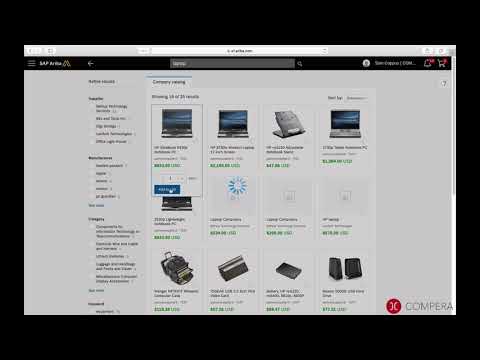
The mechanics of business unit guided buying rely on technology platforms — most commonly enterprise procurement solutions like SAP Ariba, Coupa, Jaggaer, or Oracle Procurement Cloud. These systems provide the infrastructure that enables guided catalog purchasing and intelligent buying experiences for internal stakeholders. Here is how the process typically unfolds:
- Catalog Assignment: Business units are assigned curated, policy-compliant catalogs populated with pre-negotiated suppliers, approved items, and preferred pricing agreements. When a buyer searches for a product or service, they see only options that align with corporate procurement guidelines.
- Rule-Based Navigation: The platform applies business rules dynamically — if a purchase exceeds a defined threshold, an automatic approval request routes to the appropriate manager. If an item falls outside the preferred catalog, the system flags it for review or suggests an alternative.
- Approval Workflow Execution: Guided buying systems embed multi-level approval workflows tailored to department, spend category, and dollar value. This ensures that maverick spending prevention happens at the point of purchase, not after the fact.
- Policy Compliance and Reporting: Every transaction is logged against procurement policies, enabling real-time visibility into spend patterns, compliance rates, and opportunities for tail spend management across business units.

The Core Components of a Guided Buying Framework
To understand BU guided buying fully, you need to examine the architectural elements that make it function:
- Intelligent Catalogs: Curated product and service listings organized by category, supplier, and business unit relevance. These catalogs reduce search time and push buyers toward preferred suppliers.
- Dynamic Pricing Rules: Automated application of negotiated contract pricing, volume discounts, and rebate structures at the point of requisition.
- Workflow Engine: A configurable approval engine that routes purchase requisitions based on customizable business rules tied to role, department, amount, and risk category.
- Spend Analytics Integration: Real-time dashboards and reporting that connect guided buying activity to broader source-to-pay visibility, giving procurement leaders actionable insights into compliance and savings realization.
- Supplier Portal Integration: Seamless connectivity with approved supplier networks, enabling electronic invoicing, order confirmation, and delivery tracking within the guided buying ecosystem.
Benefits of Implementing BU Guided Buying
The advantages of adopting guided procurement for business units extend far beyond policy enforcement. Organizations that implement structured buying experiences consistently report transformative results across multiple dimensions of procurement performance.
| Benefit Area | Impact of BU Guided Buying |
| Policy Compliance | Reduces maverick spending by 40-60% through automated rule enforcement at the point of purchase |
| Cycle Time | Cuts purchase approval cycles from days to hours by eliminating manual routing bottlenecks |
| Cost Savings | Captures contract and preferred pricing on nearly every transaction, driving 5-15% savings on indirect spend |
| User Experience | Empowers business unit buyers with self-service capabilities while maintaining governance |
| Visibility | Provides real-time spend data mapped to categories, suppliers, and business units for better decision-making |
| Supplier Consolidation | Drives spend toward preferred vendors, strengthening negotiating leverage and improving supplier relationships |
Beyond these measurable outcomes, BU guided buying fundamentally changes the relationship between procurement and the business. Rather than procurement acting as a gatekeeper that slows things down, it becomes an enabler that equips teams with the right tools, approved suppliers, and optimized pricing — all within a governed framework. This shift is critical for organizations pursuing procurement digital transformation initiatives where user adoption and satisfaction are key success metrics.
BU Guided Buying vs. Traditional Procurement Models
Understanding the distinction between guided buying and conventional purchasing approaches clarifies why this model has gained such rapid adoption. Traditional procurement typically operates as a centralized function where business units submit requests that are manually reviewed, queued, and processed by a procurement team. This creates a bottleneck: departments wait days or weeks for routine purchases, productivity suffers, and users often circumvent the process entirely by making unauthorized purchases — the very maverick spending that procurement leaders dread.
BU guided buying flips this model by decentralizing execution while centralizing governance. The table below captures the key differences:
| Dimension | Traditional Procurement | BU Guided Buying |
|---|---|---|
| Decision Authority | Centralized — procurement team makes or approves most purchases | Distributed — business units buy within policy boundaries |
| Approval Speed | Slow, manual routing creates delays | Automated workflows enable near-real-time approvals |
| Policy Enforcement | Post-purchase audits, often reactive | Pre-purchase enforcement embedded in the buying experience |
| User Autonomy | Limited — users depend on procurement for routine buys | High — users self-serve within guided catalogs and rules |
| Spend Visibility | Fragmented, reported after the fact | Continuous, real-time visibility across all business units |
| Savings Capture | Inconsistent, relies on negotiation cycles | Automatic application of pre-negotiated contract terms |
Best Practices for BU Guided Buying Success
Implementing business unit guided buying is not a simple plug-and-play exercise. Organizations that achieve lasting success follow a disciplined approach grounded in these best practices:
- Start with Spend Classification: Before deploying guided catalogs, categorize your organization’s spend by department, category, and risk level. This classification determines which rules, catalogs, and approval workflows apply to each business unit.
- Build Business Unit-Specific Catalogs: A one-size-fits-all catalog confuses buyers and reduces adoption. Tailor catalogs to each department’s purchasing patterns, including relevant products, services, and preferred suppliers.
- Engage Business Unit Stakeholders Early: Procurement success depends on collaboration with business leaders. Involve department heads in catalog design, rule configuration, and threshold settings so the system reflects real operational needs.
- Implement Progressive Rollouts: Rather than launching across all business units simultaneously, pilot guided buying with one or two departments, gather feedback, refine the experience, and then expand incrementally.
- Leverage AI and Machine Learning: Modern guided buying platforms use artificial intelligence to suggest relevant products, predict compliance risks, and recommend preferred suppliers based on historical purchase behavior and spend analytics.
- Measure and Iterate: Track compliance rates, savings capture, cycle times, and user satisfaction regularly. Use these metrics to refine catalog content, adjust approval rules, and continuously improve the guided buying experience.
Common Challenges in BU Guided Buying and Solutions
Even well-designed guided buying initiatives face obstacles. Here are the most common challenges organizations encounter and proven strategies to address them:
- Low User Adoption: Business unit employees may resist changing established purchasing habits. The solution is to invest in intuitive user interfaces, role-based training, and clear communication about the benefits — faster approvals and fewer restrictions on routine purchases.
- Catalog Gaps: If a buyer cannot find a needed item in the guided catalog, they may resort to unauthorized channels. Regularly update catalogs based on spend data and direct feedback from business unit buyers to minimize these gaps.
- Overly Restrictive Rules: Aggressive approval thresholds and narrow catalogs frustrate users and erode trust. Balance governance with flexibility by calibrating rules based on risk tolerance and historical compliance data.
- Integration Complexity: Connecting guided buying platforms with existing ERP, financial, and supplier systems requires careful planning. Work with implementation partners to map data flows, test integrations thoroughly, and plan for ongoing maintenance.
Frequently Asked Questions
What is the difference between BU guided buying and e-procurement?
While e-procurement refers broadly to digitizing the purchasing process, BU guided buying goes further by embedding policy intelligence, automated approvals, and user-friendly guided catalogs directly into the buying experience. Traditional e-procurement systems may simply digitize paper workflows, whereas guided buying actively steers users toward compliant, cost-effective choices in real time.
How does guided buying reduce maverick spending?
Guided buying prevents maverick spending by restricting purchase options to approved catalogs and preferred suppliers, automatically applying negotiated pricing, and routing exceptions through defined approval workflows. When a buyer attempts to purchase outside these boundaries, the system either blocks the transaction or escalates it for review, ensuring policy compliance before the purchase is completed.
Which industries benefit most from BU guided buying?
Large enterprises across manufacturing, healthcare, financial services, technology, and retail benefit significantly from BU guided buying. Any organization with multiple business units, decentralized purchasing authority, and a need to control indirect spend at scale can realize substantial improvements in compliance, savings, and operational efficiency through guided purchasing models.
What technology platforms support business unit guided buying?
Leading platforms include SAP Ariba Guided Buying, Coupa Procurement, Jaggaer, Oracle Procurement Cloud, and GEP SMART. These platforms offer configurable catalog management, rule engines, approval workflows, and analytics dashboards specifically designed to enable guided buying experiences across business units.
Can small and mid-sized businesses implement BU guided buying?
Yes. While guided buying is most commonly associated with large enterprises, many modern procurement platforms now offer scaled-down versions tailored for smaller organizations. The core principles — structured catalogs, automated approvals, and policy enforcement — deliver value regardless of organizational size, particularly for companies with multiple departments or locations that need spending visibility and control.
Conclusion
BU guided buying represents a fundamental evolution in how organizations approach procurement — moving from rigid, centralized control to intelligent, policy-driven empowerment. By giving business units the tools to purchase quickly and compliantly, guided buying platforms deliver faster cycle times, stronger cost discipline, and better user experiences simultaneously. As procurement technology continues to advance with AI-driven recommendations, deeper ERP integrations, and more sophisticated analytics, the capabilities of business unit guided buying will only expand. For procurement leaders serious about digital transformation, guided buying is not just a tactical improvement — it is a strategic imperative that positions the entire organization for sustainable, scalable growth.