


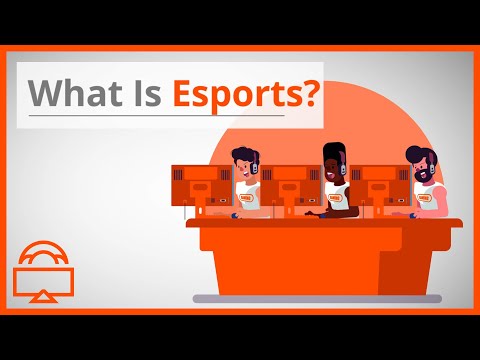
For years, one question has ignited passionate debates across living rooms, boardrooms, and sports arenas worldwide: are esports sports? Competitive gaming has exploded into a multi-billion-dollar industry, drawing millions of viewers, lucrative sponsorship deals, and even government recognition in several countries. Yet skeptics argue that sitting behind a monitor with a keyboard or controller cannot possibly qualify as a “real” sport. The truth, as with most complex topics, lives in the nuanced space between tradition and evolution. This comprehensive guide explores the esports sports debate from every angle—examining definitions, physical demands, institutional recognition, comparisons with traditional athletics, and what the future holds for competitive gaming as a legitimate sporting discipline.
Understanding the Definition of Sport and Where Esports Fits
The argument about whether esports qualifies as a sport begins with how we define the word “sport” itself. Most dictionaries and athletic governing bodies describe a sport as an activity involving physical exertion, skill, competition, and established rules. The critical word in that definition—and the source of endless controversy—is physical exertion. Traditional sports like football, basketball, and tennis demand cardiovascular fitness, muscular strength, and explosive coordination. Esports, on the surface, appear to involve nothing more than button presses and mouse clicks.
However, modern sports science tells a different story. Professional gamers experience elevated heart rates comparable to traditional athletes during high-stakes matches. Studies published in journals like the Journal of Sports Sciences have measured heart rates reaching 160–180 BPM in competitive players—levels typically associated with sprinting or intense cardiovascular exercise. The physical component of esports extends beyond the obvious:
- Fine motor skills — Professional players execute hundreds of precise inputs per minute, requiring extraordinary hand-eye coordination and reaction times measured in milliseconds.
- Cognitive endurance — Maintaining peak focus for hours during tournament play demands mental stamina, similar to a chess grandmaster or a golfer over 72 holes.
- Physical training regimen — Top esports athletes follow strict workout routines, including hand and wrist exercises, cardio, stretching, and nutrition plans to prevent repetitive strain injuries.
- Reaction time and reflexes — Research shows elite gamers have faster peripheral vision processing and decision-making speeds than the average population.
What Does the Oxford Dictionary Say?
The Oxford English Dictionary defines sport as “an activity involving physical exertion and skill in which an individual or team competes against another or others for entertainment.” This definition creates a clear tension with esports, since the “physical exertion” criterion is debatable. However, the Cambridge Dictionary offers a broader interpretation, describing sport as “a game or competition that people do for pleasure, requiring physical effort or skill.” Under this wider lens, competitive gaming comfortably falls within the boundaries.
Comparing Esports and Traditional Sports Side by Side

To determine whether esports should be classified alongside traditional athletics, let us examine the structural and functional similarities and differences. The following comparison table highlights key dimensions where the two domains overlap and diverge.
| Dimension | Traditional Sports | Esports |
| Primary physical demand | Cardiovascular endurance, muscular strength, agility | Fine motor precision, cognitive speed, visual acuity |
| Training hours per day | 4–8 hours | 8–14 hours |
| Team dynamics | Coordination, communication, role specialization | Identical—coordination, callouts, role execution |
| Age of peak performance | 20–30 years (varies by sport) | 16–25 years (reaction time advantage) |
| Governing bodies | IOC, FIFA, NCAA, etc. | ESL, Riot Games, Valve, Blizzard |
| Tournament prize pools | Varies widely (Millions to billions) | Dota 2 The International: $40M+; League of Legends Worlds: $2M+ |
| Global viewership | Billions (FIFA World Cup, Olympics) | Hundreds of millions (League of Legends Worlds 2023: 6.4M peak concurrent) |
| Mental health pressures | High — performance anxiety, burnout | Extremely high — identical burnout, anxiety, isolation risks |
| Institutional recognition | Universally recognized | Growing — recognized in South Korea, China, USA, and parts of Europe |
As you can see, the structural DNA of esports mirrors traditional sports in almost every measurable way. Teams have coaches, analysts, nutritionists, and psychologists. Players sign contracts, negotiate salaries, and retire in their mid-to-late twenties. The competitive ecosystem—league structures, promotion and relegation, sponsorship deals, and global fanbases—closely resembles that of established professional leagues.
Institutional Recognition: Are Esports Officially Sports?
Recognition from governing bodies is one of the strongest indicators of whether a competitive activity qualifies as a sport. Over the past decade, esports has gained significant institutional backing across the globe:
- The International Olympic Committee (IOC) — In 2017, the IOC officially recognized esports as a “sporting activity.” While they have not yet endorsed esports for the Olympic Games, the Olympic Council of Asia included esports in the 2022 Hangzhou Asian Games as a medal event—a landmark moment for competitive gaming.
- South Korea — The country that pioneered organized esports officially classifies professional gaming as a legitimate sport. The Korean e-Sports Association (KeSPA) operates under the Ministry of Culture and Sports.
- United States — The U.S. government grants P-1 visas to professional esports players, the same visa category reserved for internationally recognized athletes. The National Collegiate Athletic Association (NCAA) has explored varsity esports programs at member institutions.
- China — The Chinese government formally recognized esports as an official sport in 2003, and the country now hosts some of the largest esports tournaments and academies in the world.
The Olympic Debate
The question of whether esports will ever become an Olympic sport remains hotly contested. IOC President Thomas Bach has stated that an activity must include “physical activity” to be considered for the Games. This stance has drawn criticism from esports advocates who argue that the IOC’s definition of physical activity is outdated. As cognitive science continues to evolve and our understanding of brain-body connections deepens, the line between “physical” and “mental” sports becomes increasingly blurry—a topic that deserves serious attention from anyone following the future of competitive athletics.

The Skills That Define Professional Gaming
Dismissing esports as “not a sport” often stems from a narrow view of what constitutes athletic ability. Professional gamers develop an extraordinary skill set that demands years of disciplined practice:
- Aim precision — In first-person shooters like Counter-Strike 2 and Valorant, professional players consistently land headshots with sub-millisecond reaction windows.
- Strategic thinking — Real-time strategy games like StarCraft II require players to manage resources, scout opponents, and execute complex build orders simultaneously—a cognitive load comparable to a fighter pilot managing multiple systems in real time.
- Team coordination — Games like League of Legends and Dota 2 demand seamless five-player coordination, where a single miscommunication can cost a championship match.
- Emotional regulation — Top competitors must maintain composure under extreme pressure, managing tilt, frustration, and performance anxiety in ways that parallel any traditional athlete’s mental game.
These are not casual hobbies practiced in a bedroom. These are professional disciplines requiring elite-level cognitive performance, deliberate practice, and competitive rigor.
Expert Tips for Understanding the Esports Sports Debate
If you are new to the world of competitive gaming or looking to strengthen your arguments in the esports debate, consider these expert-recommended approaches:
- Watch professional tournaments live — Observing the intensity, strategy, and pressure of events like the League of Legends Worlds Championship or the Intel Extreme Masters will give you firsthand appreciation for the skill involved.
- Study the training routines — Look into the daily regimens of esports professionals. Organizations like T1 (formerly SK Telecom T1) and Team Liquid publish behind-the-scenes content showing their athletes’ physical and mental preparation.
- Follow the research — Academic institutions including the University of Oxford and Loughborough University have published peer-reviewed studies on the cognitive demands and physical aspects of competitive gaming.
- Engage respectfully with critics — The esports sports debate thrives on dialogue. Understanding both sides—physical exertion concerns, the definition of sport, and the cultural significance of gaming—will help you form a well-rounded perspective.
Conclusion: Are Esports Sports?
The answer to “are esports sports” is not a simple yes or no—it depends entirely on how you define sport. By every structural, professional, and institutional measure, competitive gaming operates as a sport. The athletes train rigorously, compete under formal rules, earn professional salaries, and represent organizations and nations on a global stage. The physical component is different from traditional athletics, but it is no less real. As cognitive science continues to validate the extraordinary demands placed on professional gamers, and as international governing bodies expand their recognition, the stigma surrounding competitive gaming is fading. Whether the Olympics embrace esports remains to be seen, but one thing is certain: competitive gaming has earned its place in the broader conversation about what it means to be an athlete in the 21st century.
Frequently Asked Questions
Are esports considered a real sport by major organizations?
Yes, multiple major organizations recognize esports as a sport. The International Olympic Committee classified esports as a “sporting activity” in 2017, and countries like South Korea, China, and the United States officially recognize professional gaming as a legitimate competitive sport. Additionally, the U.S. government grants P-1 athlete visas to professional esports players.
What are the physical demands of being a professional esports player?
Professional gamers experience elevated heart rates of 160–180 BPM during matches, require exceptional fine motor precision executing hundreds of inputs per minute, and face risks of repetitive strain injuries including carpal tunnel syndrome and “gamer thumb.” Top players follow structured training regimens including cardio, hand exercises, wrist stretches, and nutrition plans to maintain peak physical condition.
How does esports compare to traditional sports in terms of viewership and revenue?
Esports has experienced explosive growth, with major events like the League of Legends Worlds Championship drawing millions of concurrent viewers globally. The global esports market revenue surpassed $1.8 billion in 2023, and prize pools for major tournaments now reach tens of millions of dollars—rivaling many traditional sporting events in their respective niches.
Can esports be included in the Olympic Games?
The inclusion of esports in the Olympic Games is actively debated. While the IOC recognized esports as a sporting activity, President Thomas Bach has emphasized that Olympic inclusion requires physical activity. The Olympic Council of Asia took a step forward by including esports as a medal event in the 2022 Hangzhou Asian Games, signaling growing institutional openness.
What skills do professional esports players need to succeed at the highest level?
Elite esports players must possess lightning-fast reaction times, strategic thinking, exceptional hand-eye coordination, team communication skills, and the mental fortitude to perform under intense pressure. Many of these cognitive and psychomotor skills parallel those found in traditional athletes, making the comparison between esports and traditional sports more nuanced than critics often acknowledge.