


When you buy a pair of shoes from Amazon at midnight, sell a handmade necklace on Etsy, or subscribe to a meal-kit service through an app, you are participating in e-commerce. But the definition of e commerce stretches far beyond online shopping. At its core, electronic commerce refers to the buying, selling, marketing, and servicing of products or services using digital networks and electronic payment systems. It encompasses every transaction that happens through the internet, from a multinational corporation ordering raw materials from a supplier in another country to a freelancer invoicing a client via PayPal.
Understanding what e-commerce truly means in 2024 and beyond is essential whether you are a budding entrepreneur, a marketing professional, a student exploring business models, or an established retailer looking to expand digitally. This guide breaks down the definition, the models, the key components, and the practical steps you need to know to thrive in the online marketplace.
What Is the Definition of E-Commerce in Simple Terms?
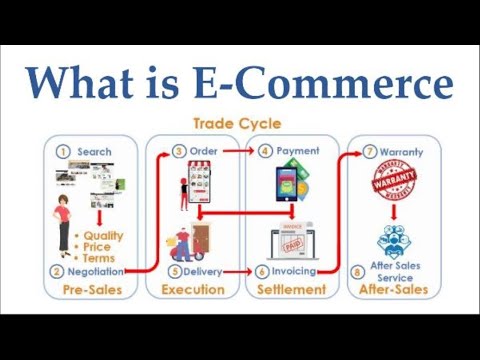
The most widely accepted e-commerce definition is the exchange of goods, services, or information conducted electronically over the internet. Unlike traditional brick-and-mortar commerce, electronic commerce eliminates geographical barriers, operates around the clock, and relies on digital infrastructure such as websites, mobile apps, payment gateways, and logistics networks. The term itself is short for electronic commerce, and it covers every stage of a transaction — from browsing and selection to payment processing and post-sale support.

It is important to distinguish e-commerce from e-business. While e-commerce focuses specifically on commercial transactions, e-business is a broader term that includes all business operations conducted online, including internal processes like inventory management, human resources, and customer relationship management. E-commerce is a subset of e-business, not a synonym for it.
The Major Types of E-Commerce Models
Electronic commerce is not a one-size-fits-all concept. It operates through several distinct business models, each defined by the relationship between the buyer and the seller. Knowing these models helps you identify where your business fits and how to tailor your strategy accordingly.
Business-to-Consumer (B2C)
This is the model most people think of when they hear the definition of e-commerce. A business sells directly to individual consumers. Think of retailers like Nike.com, Walmart’s online store, or digital subscription services like Netflix. B2C e-commerce thrives on emotional purchasing decisions, mobile commerce, and personalized marketing.
Business-to-Business (B2B)
In B2B electronic commerce, one business sells products or services to another. This could be a manufacturer supplying components to a retailer, or a software company selling SaaS tools to enterprise clients. B2B transactions tend to involve larger order volumes, longer sales cycles, and more complex pricing structures.
Consumer-to-Consumer (C2C)
This model facilitates transactions between individual consumers. Platforms like eBay, Craigslist, and Facebook Marketplace are prime examples. C2C e-commerce relies heavily on trust mechanisms such as ratings, reviews, and escrow services to ensure safe transactions between strangers.
Consumer-to-Business (C2B)
In the C2B model, individuals offer products or services to businesses. Freelancers uploading portfolios on Upwork, influencers monetizing their audience through brand partnerships, or photographers licensing images to stock agencies are all C2B electronic commerce examples. This model has grown dramatically with the rise of the gig economy.
Other Emerging Models
- Government-to-Citizen (G2C): Government services delivered online, such as tax filing or permit applications.
- Business-to-Government (B2G): Companies bidding on government contracts through electronic procurement portals.
- Social Commerce: Purchasing directly through social media platforms like Instagram Shops or TikTok Shop.
- Subscription Commerce: Recurring delivery of products or services, as seen with Dollar Shave Club or Adobe Creative Cloud.
Key Components That Power Electronic Commerce
A successful online business depends on more than just a website. Several interconnected components make electronic commerce function smoothly. Understanding these elements is critical whether you are building a store from scratch or optimizing an existing one.
- E-Commerce Platform: The software foundation — Shopify, WooCommerce, Magento, or BigCommerce — that manages your storefront, product catalog, and order processing.
- Payment Gateway: Services like Stripe, PayPal, or Square that securely process credit card transactions, digital wallets, and alternative payment methods.
- SSL Certificate and Security: Encryption protocols that protect customer data and build trust, indicated by the padlock icon in the browser address bar.
- Inventory Management System: Tools that track stock levels in real time, prevent overselling, and automate reorder alerts.
- Logistics and Fulfillment: Warehousing, shipping carriers, and last-mile delivery solutions that get products into customers’ hands.
- CRM and Analytics: Customer relationship management and data analytics tools that track behavior, optimize conversions, and personalize the shopping experience.
E-Commerce vs Traditional Commerce: A Side-by-Side Comparison
To truly grasp the definition of electronic commerce, it helps to compare it directly with traditional retail. The table below highlights the most significant differences.
| Aspect | E-Commerce | Traditional Commerce |
| Operating Hours | 24/7, globally accessible | Limited to store hours and location |
| Geographic Reach | Worldwide, no physical boundaries | Restricted to local or regional markets |
| Overhead Costs | Lower — no physical storefront rent | Higher — rent, utilities, staffing |
| Payment Methods | Digital wallets, cards, BNPL, crypto | Cash, card terminals, checks |
| Customer Data | Rich behavioral analytics and tracking | Limited to loyalty programs and receipts |
| Personalization | AI-driven recommendations at scale | Relies on staff knowledge and intuition |
| Scalability | Highly scalable with minimal marginal cost | Requires physical expansion and staffing |
Why E-Commerce Is Dominating the Retail Landscape
The shift from traditional commerce to digital transactions has accelerated dramatically, especially since 2020. Global e-commerce sales surpassed $5.7 trillion in 2022 and continue to grow at double-digit rates year over year. Consumers now expect the convenience of browsing, comparing, and purchasing from their smartphones at any hour. Businesses that fail to embrace online commerce risk losing market share to competitors who offer seamless digital experiences.
Mobile commerce, or m-commerce, deserves special mention here. With over 5 billion smartphone users worldwide, a significant portion of electronic commerce transactions now occur on mobile devices. Optimizing for mobile — through responsive design, fast-loading pages, and streamlined checkout flows — is no longer optional; it is a business necessity.
Practical Steps to Launch Your E-Commerce Business
If the definition of e-commerce inspires you to start your own online venture, here is a practical roadmap grounded in real-world experience.
- Choose your niche and validate demand: Use tools like Google Trends, SEMrush, and Amazon Best Sellers to confirm that people are actively searching for your product category.
- Select the right platform: Match your platform to your technical skill level and business needs. Shopify excels for beginners, while WooCommerce offers flexibility for WordPress users. Magento suits large-scale operations.
- Build a brand identity: Invest in professional logo design, consistent visual branding, and a compelling brand story that resonates with your target audience.
- Optimize product listings: Use high-quality images, detailed descriptions, relevant keywords, and clear pricing to reduce bounce rates and increase conversions.
- Set up secure payment processing: Offer multiple payment options and ensure PCI compliance to protect customer financial data.
- Develop a marketing strategy: Combine SEO, social media marketing, email campaigns, and paid advertising to drive traffic and build a loyal customer base.
- Focus on customer experience: Fast shipping, easy returns, responsive customer service, and personalized communication turn one-time buyers into repeat customers.
Expert Tips for Long-Term Success
- Invest in email marketing — it consistently delivers the highest return on investment of any digital channel.
- Leverage user-generated content like reviews and unboxing videos to build social proof.
- Implement abandoned cart recovery sequences to recapture lost sales.
- Stay updated on privacy regulations like GDPR and CCPA to maintain compliance and customer trust.
- Continuously A/B test your website layout, product pages, and checkout flow to optimize conversion rates.
The Future of Electronic Commerce
The definition of e-commerce continues to evolve as technology advances. Several trends are reshaping the landscape right now. Artificial intelligence and machine learning are powering hyper-personalized shopping experiences, chatbot customer service, and predictive inventory management. Augmented reality is allowing customers to virtually “try on” products — from clothing to furniture — before making a purchase. Voice commerce, driven by smart speakers like Amazon Echo and Google Home, is opening up an entirely new channel for transactions. Blockchain technology promises greater transparency in supply chains and more secure payment processing.
Social commerce is another frontier blurring the lines between social media and online retail. Platforms are increasingly integrating shopping features directly into feeds, stories, and live streams, making the path from discovery to purchase shorter than ever.
Conclusion
The definition of e-commerce is far more than just “selling things online.” It represents a fundamental shift in how businesses operate, how consumers shop, and how value is created and exchanged in a digital-first world. From the early days of basic online storefronts to today’s AI-powered, social-integrated, mobile-first ecosystems, electronic commerce has continuously reinvented itself. Whether you are just starting out or scaling an existing operation, understanding the nuances of e-commerce models, components, and strategies gives you the foundation to succeed in one of the most dynamic and competitive industries in the world.
Frequently Asked Questions
What is the simplest definition of e-commerce?
E-commerce, short for electronic commerce, is the buying and selling of goods and services over the internet, along with the transfer of money and data to complete those transactions.
How is e-commerce different from e-business?
E-commerce focuses specifically on online transactions — the exchange of products or services for money. E-business is a broader term that encompasses all business activities conducted online, including internal operations, communication, and management processes beyond just sales.
What are the four main types of e-commerce models?
The four primary models are Business-to-Consumer (B2C), Business-to-Business (B2B), Consumer-to-Consumer (C2C), and Consumer-to-Business (C2B). Each model defines the relationship between the parties involved in the transaction.
What technology is essential for running an e-commerce business?
Core technologies include an e-commerce platform (such as Shopify or WooCommerce), a secure payment gateway, SSL encryption for data protection, an inventory management system, and analytics tools for tracking performance and customer behavior.
Is e-commerce only for large businesses?
Not at all. E-commerce is accessible to businesses of all sizes. Platforms like Shopify and Etsy allow solo entrepreneurs and small businesses to set up professional online stores with minimal upfront investment, making digital commerce one of the most democratized business models available today.