


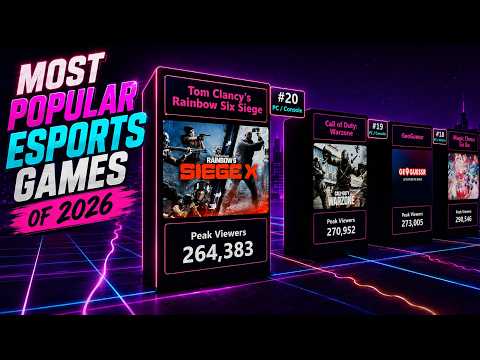
The world of competitive gaming has exploded over the past decade, evolving from niche LAN parties into a multi-billion-dollar global industry. When people talk about “all esports games,” they are referring to the full spectrum of video titles that support organized, competitive play at amateur and professional levels. From tactical shooters and multiplayer online battle arenas to fighting games and real-time strategy titles, the esports landscape is incredibly diverse. This guide covers every major competitive gaming category, explores the titles that define the scene, and offers practical insights for anyone looking to understand or enter the esports ecosystem.
What Exactly Qualifies as an Esports Game?
Not every video game qualifies as an esports title. To earn a spot in the competitive circuit, a game needs structured rules, organized tournaments, ranked matchmaking systems, and a dedicated player base willing to invest thousands of hours mastering mechanics. The best esports games balance skill depth with accessibility, giving newcomers a chance to learn while offering veterans enough complexity to stay competitive for years.
Key characteristics of top-tier competitive games include:

- Ranked or ladder-based matchmaking systems
- Active developer support for competitive balance
- Established tournament circuits with prize pools
- Spectator-friendly formats with broadcast infrastructure
- A thriving community of content creators and analysts

The Most Popular Esports Games by Genre
Battle Royale Titles
Battle royale games dropped players into shrinking maps where the last team or individual standing wins. This genre revolutionized competitive gaming because every match feels unique, and the combination of gunplay, survival mechanics, and strategic positioning creates endless variance.
Leading battle royale esports titles include:
- Fortnite – Hosted massive cross-platform tournaments like the FNCS and World Cup
- PUBG: Battlegrounds – Pioneered the genre and maintains a strong competitive circuit
- Apex Legends – EA’s hero-based BR features a dedicated ALGS league
- Call of Duty: Warzone – The CDL integrates Warzone into its official competitive format

MOBA (Multiplayer Online Battle Arena) Games
MOBAs are arguably the backbone of esports. These team-based strategy games require communication, role specialization, and deep map awareness. The professional scenes for the top MOBAs attract millions of concurrent viewers during Worlds and MSI tournaments.
- League of Legends – Riot’s flagship title dominates global viewership and prize pools
- Dota 2 – Valve’s title hosts The International, the single largest prize pool in esports history
- Mobile Legends: Bang Bang – A rising force in Southeast Asian and Middle Eastern markets
- Honor of Kings / Arena of Valor – Hugely popular in the Chinese and mobile esports scenes
First-Person Shooters
FPS titles test reflexes, aim, game sense, and teamwork simultaneously. The skill ceiling in competitive shooters is notoriously high, and top players spend years refining their crosshair placement and movement mechanics.
- Counter-Strike 2 – The successor to CS:GO remains the king of tactical shooters
- Valorant – Riot’s hero-shooter hybrid blends agent abilities with precise gunplay
- Overwatch 2 – Blizzard’s team-based shooter powers the Overwatch League format
- Call of Duty – The COD Championship series runs on a yearly cycle
Fighting Games
Fighting games are the most individualistic category in esports. Players face off one-on-one, and the depth of combos, frame data, and matchup knowledge separates casuals from world champions. The Evolution Championship Series (EVO) remains the single most iconic fighting game tournament.
- Street Fighter 6 – Capcom’s modern fighting game has revitalized the FGC scene
- Tekken 8 – Bandai Namco’s 3D fighter draws massive international competition
- Guilty Gear Strive – Known for its flashy mechanics and passionate community
- Super Smash Bros. Ultimate – Nintendo’s crossover fighter has a unique competitive culture
Card, Strategy, and Emerging Titles
The competitive gaming world extends beyond shooters and MOBAs. Digital card games and real-time strategy titles have carved out passionate niches, while newer releases continue expanding what counts as a viable esports game.
- Magic: The Gathering Arena – Digital CCG with official competitive circuits
- Hearthstone – Blizzard’s card game hosted major international events
- StarCraft II – The gold standard for RTS esports, especially in Korea
- Rocket League – A vehicular soccer game with surprisingly deep competitive play
- Naraka: Bladepoint – A martial arts battle royale gaining traction in Asian markets
Comparison Table: Major Esports Games at a Glance
| Game | Genre | Format | Top League | Estimated Viewership |
| League of Legends | MOBA | 5v5 | LCS, LEC, LCK, LPL | 5–6 million peak |
| Counter-Strike 2 | Tactical FPS | 5v5 | ESL Pro League, IEM | 1.5–2 million peak |
| Dota 2 | MOBA | 5v5 | The International | 3–4 million peak |
| Valorant | Hero Shooter | 5v5 | VCT | 1–2 million peak |
| Fortnite | Battle Royale | Solo/Duo/Squad | FNCS | 2–3 million peak |
| Apex Legends | Battle Royale | Squad | ALGS | 500K–1 million peak |
| Street Fighter 6 | Fighting | 1v1 | EVO, Capcom Pro Tour | Hundreds of thousands |
| Rocket League | Sports | 3v3 | RLCS | 300K–600K peak |
How to Get Started in Competitive Gaming
Whether you are a beginner exploring your first ranked match or an intermediate player aiming for amateur tournaments, the path into esports starts with deliberate practice. Pick a title that genuinely excites you, because grinding ranked games feels sustainable only when you enjoy the core gameplay loop.
- Choose your game and stick with it. Spreading your time across five titles dilutes improvement. Master one before branching out.
- Study the fundamentals. Watch high-level streams, review your replays, and identify recurring mistakes in your decision-making.
- Join a community. Discord servers, Reddit threads, and local scenes connect you with teammates and mentors.
- Enter amateur tournaments. Platforms like Battlefy, FACEIT, and start.gg host open brackets perfect for newcomers.
- Invest in your setup. A stable internet connection, a responsive monitor, and a comfortable peripheral matter more than expensive gear alone.
The Esports Ecosystem: Tournaments, Leagues, and Prize Pools
Professional esports operates on a layered structure. At the top sit tier-one tournaments like Worlds, The International, and the CS2 Major Championships, which offer multi-million-dollar prize pools and global broadcast deals. Below those are regional leagues, open cups, and grassroots events that serve as feeders into the top scene.
Key organizations shaping the ecosystem include:
- Riot Games – Operates LoL and Valorant leagues across every major region
- ESL FACEIT Group – Runs CS2 and other competitive circuits worldwide
- PUBG Corporation – Manages the PUBG Global Championship series
- Tencent – Owns LoL’s Chinese publishing and hosts numerous mobile esports events
- Activision Blizzard – Runs the Call of Duty League and Overwatch League structures
Total prize pools across all esports titles exceeded $250 million in 2023 alone, with individual tournaments occasionally surpassing $40 million for a single event.
What Makes an Esports Game Successful Long-Term?
The titles that survive for years in the competitive scene share several traits. Developer commitment to balance patches and meta evolution keeps the game fresh. Accessibility on multiple platforms expands the player pool. And transparent communication from the development team builds trust with the community.
Games that fail to maintain competitive infrastructure often see their scenes collapse. Titles like Halo Infinite, which launched without a functional ranked system, and certain battle royale games that lacked consistent tournament support, serve as cautionary examples. The lesson is clear: a competitive framework is just as important as the gameplay itself.
Expert Tips for Aspiring Competitive Gamers
Professional players and coaches consistently emphasize fundamentals over flashy plays. Here are actionable tips drawn from top-tier esports professionals:
- VOD review is non-negotiable. Watching your own replays reveals patterns you cannot see in real time.
- Physical fitness matters. Elite players train hand-eye coordination, posture, and reaction time like traditional athletes.
- Mental resilience separates good from great. Tilt management and consistent routines prevent performance drops under pressure.
- Specialize before generalizing. Mastering one role or character gives you a competitive edge before learning others.
- Network deliberately. Many professional opportunities come from connections made in amateur tournaments and community events.
Conclusion
The world of all esports games is vast, dynamic, and constantly evolving. From the tactical precision of Counter-Strike 2 to the strategic depth of Dota 2, the mechanical mastery of fighting games, and the unpredictability of battle royale titles, there is a competitive game for every type of player. Whether your goal is casual improvement, amateur competition, or professional play, understanding the full landscape of esports titles gives you a massive advantage. Stay informed, practice deliberately, and engage with the community — the scene rewards those who put in the work.
Frequently Asked Questions
What are the top 5 esports games by viewership in 2024?
The top five competitive titles by viewership consistently include League of Legends, Counter-Strike 2, Dota 2, Valorant, and Fortnite. League of Legends dominates global numbers, while CS2 and Dota 2 command massive audiences during their respective premier events. Valorant has grown rapidly since launching its VCT ecosystem, and Fortnite continues to draw huge crowds during FNCS and World Cup weekends.
Can any video game become an esport?
Technically, yes — but not every game sustains a competitive scene. For a title to become a legitimate esport, it needs balanced gameplay, developer commitment to tournament infrastructure, a large and engaged player base, and spectating tools that make matches easy to follow. Games without these elements tend to attract only fleeting competitive interest.
What is the best esports game for beginners to compete in?
League of Legends and Valorant are among the most beginner-friendly esports games because of their robust ranked systems, extensive tutorial content, and large matchmaking pools. Rocket League also offers an accessible entry point since its mechanics are intuitive, and the skill curve rewards consistent practice over innate talent.
How much money can professional esports players earn?
Top-tier esports professionals earn through tournament winnings, salary contracts, streaming revenue, and sponsorship deals. Players on tier-one teams in games like League of Legends and CS2 can earn six-figure salaries, while tournament prize pools for events like The International can push individual earnings well into the millions over a career.
Which esports game has the largest prize pool ever recorded?
Dota 2’s The International holds the record for the largest single-event prize pool in esports history. TI 2021 featured a crowdfunded prize pool exceeding $40 million, with the winning team taking home over $18 million. No other individual tournament has matched that level of financial magnitude in competitive gaming.