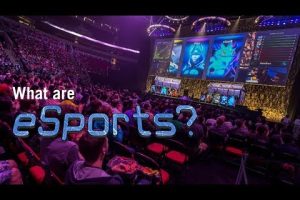
When someone asks what does esports mean, the answer goes far beyond simply “playing video games competitively.” The esports meaning encompasses a massive, multi-billion-dollar ecosystem of professional competitive gaming where skilled players, organized teams, and thriving communities converge around structured tournaments, leagues, and sponsorship deals. Over the past decade, competitive gaming has evolved from a niche subculture into one of the most-watched and financially lucrative entertainment industries on the planet. Understanding the full scope of what is esports requires exploring its history, structure, key titles, career pathways, and the cultural shift that transformed digital competition into a global phenomenon recognized alongside traditional athletics.

What Does Esports Mean? A Comprehensive Definition
The term esports is a portmanteau of electronic sports, referring to organized, multiplayer video game competitions, particularly between professional players, individually or as teams. Unlike casual gaming, esports definition centers on structured leagues, ranked competitive play, prize pools, broadcasting, and franchised ecosystems. The International Olympic Committee and numerous national governing bodies now recognize esports as a legitimate form of sport, further cementing its place in the modern athletic and entertainment landscape. Whether you are a curious newcomer or a seasoned gamer looking to understand the industry’s backbone, grasping the meaning of esports is the essential first step.
The Origins and Evolution of Competitive Gaming
The roots of competitive gaming history trace back to the early 1970s and 1980s, when arcade tournaments like Spacewar and later Street Fighter II laid the groundwork for organized play. However, the esports meaning as we understand it today began taking shape in the late 1990s and early 2000s with games like Quake, StarCraft, and Counter-Strike. The launch of platforms like Battle.net and early streaming services allowed players to compete globally, building the foundation for what would become a professional industry.
By the mid-2010s, titles like League of Legends, Dota 2, and Overwatch had established professional esports leagues with multi-million-dollar prize pools and millions of concurrent viewers. Platforms like Twitch and YouTube Gaming became the primary broadcasting channels, turning pro players into household names and creating entirely new career paths in commentary, coaching, content creation, and event management.
Key Milestones in Esports History
- 1972: The first known video game competition at Stanford University (Spacewar)
- 1997: The Red Annihilation Quake tournament, considered the first true esports event
- 2000: Korea establishes the Korean e-Sports Association (KeSPA)
- 2011: Twitch launches, revolutionizing esports broadcasting and viewership
- 2017: The International (Dota 2) sets a record with over $24 million in prize pool
- 2022: Esports becomes a medal event at the Asian Games
How Esports Differs from Traditional Sports
Understanding the esports meaning also means recognizing how esports vs traditional sports compares and contrasts. Both domains demand elite hand-eye coordination, strategic thinking, teamwork, relentless practice regimens, and mental resilience. However, the medium, accessibility, and business models differ significantly.
| Aspect | Esports | Traditional Sports |
| Physical Requirements | Reflexes, cognitive processing, fine motor skills | Strength, endurance, agility, physical fitness |
| Barrier to Entry | Low — requires a PC or console | High — requires physical training, facilities, equipment |
| Global Reach | Internet-based; anyone can compete globally | Often region-bound due to travel and infrastructure |
| Revenue Model | Streaming, sponsorships, media rights, microtransactions | Ticket sales, broadcasting rights, merchandise |
| Career Longevity | Typically 5–10 years, often shorter | Can extend 15–25+ years with proper management |
| Audience Demographics | Skews younger (16–34), digitally native | Broader age range, more traditional demographics |
The esports industry definition is inherently digital-first, meaning tournaments can be held entirely online or in massive arena events, offering flexibility that traditional sports cannot match. This digital-native characteristic is a core reason why esports has grown so rapidly among younger demographics worldwide.
Key Components That Define the Esports Ecosystem
A complete understanding of what is esports requires familiarity with its core structural components. These elements work together to create the competitive ecosystem that supports everything from grassroots tournaments to global championships.
- Game Publishers and Developers — Companies like Riot Games, Valve, Blizzard Entertainment, and Epic Games design and maintain competitive titles, update balance patches, and often directly organize flagship events like Worlds or The International.
- Professional Players and Teams — Elite competitors who dedicate their careers to mastering specific games. Teams like T1, Fnatic, Team Liquid, and Gen.G operate with full coaching staffs, analysts, and support personnel.
- Leagues and Tournaments — Structured competition circuits such as the League Championship Series (LCS), League of Legends Champions Korea (LCK), Overwatch League, and Valorant Champions Tour (VCT).
- Broadcast Platforms and Streamers — Twitch, YouTube Gaming, and Facebook Gaming serve as primary viewing platforms, while professional casters and analysts provide commentary and strategic breakdowns.
- Sponsors and Brand Partners — Companies like Red Bull, Mercedes-Benz, Nike, and Intel invest heavily in esports, funding teams, tournaments, and content creation.
- Fans and Communities — Dedicated fanbases that drive viewership, engagement, merchandise sales, and cultural relevance through social media, forums, and live events.
Understanding the Meaning of Competitive Gaming at Every Level
Esports operates across multiple tiers of competition. At the grassroots level, amateur players compete in open qualifiers, ranked ladders, and community tournaments. Intermediate players may join semi-professional teams or academy squads affiliated with major organizations. At the elite level, world-class professionals earn six-figure salaries through salaries, tournament winnings, streaming revenue, and brand endorsement deals. This tiered structure is what makes the esports meaning so expansive — it is not a single career path but an entire industry ecosystem.
Major Esports Titles That Define the Scene
The esports meaning shifts depending on the title you examine, as each game carries its own competitive meta, community, and professional infrastructure. The most prominent titles shaping the current landscape include:
- League of Legends — The largest esports title by viewership and revenue, featuring a global franchise league model and annual World Championship.
- Dota 2 — Known for The International, the single richest tournament in esports history, with prize pools crowdfunded by the community.
- Counter-Strike 2 (CS2) — A legendary tactical shooter with a deeply established competitive scene and iconic events like the ESL Pro League and IEM Katowice.
- Valorant — Riot Games’ tactical FPS that has rapidly grown into a premier esports title with a franchised VCT ecosystem.
- Fortnite — Combines battle royale gameplay with massive solo and duo tournaments featuring some of the largest prize pools in competitive gaming.
- Overwatch 2 — Blizzard’s hero shooter with a team-based competitive format and a global Overwatch Champions Series (OWCS).
- Rocket League — A unique blend of vehicular soccer and physics-based gameplay that has attracted a dedicated competitive community.
Practical Recommendations for Getting Involved in Esports
Whether you want to compete professionally, build a career in the industry, or simply deepen your appreciation for competitive gaming, here are expert recommendations to help you navigate the esports meaning from a practical standpoint.
For Aspiring Competitive Players
- Choose one title and commit deeply — mastery requires thousands of hours of deliberate practice
- Study professional gameplay through VOD reviews and tournament analysis
- Join community teams or Discord servers to find like-minded competitors
- Participate in ranked ladders and open tournaments to build your competitive resume
- Develop mental resilience and discipline — the psychological demands of professional play are immense
For Career-Oriented Enthusiasts
The esports career meaning extends far beyond playing. The industry needs coaches, analysts, broadcasters, event producers, marketing professionals, data scientists, and community managers. Consider gaining experience through internships with esports organizations, creating content on streaming platforms, or pursuing relevant education in sports management, digital media, or data analytics.

Expert Tips for Understanding Esports at a Deeper Level
- Follow multiple leagues simultaneously — each ecosystem has its own rules, formats, and competitive culture.
- Learn the meta — understanding patch notes, balance changes, and strategic trends separates casual viewers from knowledgeable fans.
- Engage with communities — Reddit, Twitter/X, and dedicated forums provide real-time analysis and discussion that enriches your understanding.
- Attend live events when possible — the energy of an in-person esports tournament is unlike anything experienced through a screen.

FAQ — Long-Tail Keyword Questions About Esports Meaning
What is the real meaning of esports?
The real meaning of esports is electronic sports — organized, professional competitive video gaming where players or teams compete in structured tournaments and leagues for prizes, recognition, and careers. It encompasses the entire ecosystem including game development, team management, broadcasting, sponsorship, and fan engagement.
How is esports different from regular video gaming?
Regular video gaming refers to casual or recreational play for entertainment, while esports competitive gaming involves structured competition with defined rules, ranked matchmaking, professional teams, coaching staff, and significant prize pools. Esports operates under formal governance structures similar to traditional sports federations.
Can esports be considered a real sport?
Yes, an increasing number of governing bodies and institutions recognize esports as a legitimate sport. It requires the same core elements as traditional sports — skill, strategy, teamwork, discipline, and professional competition — though it relies on digital platforms and cognitive performance rather than physical athleticism.
What are the career opportunities in esports beyond playing?
The esports industry meaning covers a wide range of careers including coaching, analytics, broadcasting, casting, event production, marketing, community management, content creation, sports psychology, and brand partnerships. The ecosystem supports professionals with diverse skill sets across entertainment, technology, and business.
What does the future of esports look like in terms of mainstream recognition?
The future of esports points toward deeper mainstream integration. With the inclusion of esports in the Asian Games, growing university scholarship programs, increasing broadcasting deals with major networks, and continued investment from traditional sports franchises and brands, the meaning of esports is evolving into a globally accepted and celebrated competitive discipline.
Conclusion
The esports meaning is far richer and more complex than a simple dictionary definition can capture. It represents a cultural shift in how we define competition, entertainment, and community in the digital age. From humble arcade tournament beginnings to billion-dollar global leagues, esports has proven itself as a legitimate, dynamic, and endlessly evolving industry. Whether you are stepping into competitive play, building a career behind the scenes, or simply enjoying the spectacle as a fan, understanding what is esports opens the door to one of the most exciting and rapidly growing phenomena of the modern era. The digital arena is here to stay, and its meaning continues to expand with every new title, every new champion, and every new fan who joins the community.