The e-commerce definition in business refers to the buying and selling of goods, services, or digital products over electronic networks, primarily the internet. It encompasses every transaction conducted online, from a customer purchasing a book through a website to complex B2B supply chain exchanges handled by automated systems. Far more than just an online storefront, e-commerce represents a fundamental shift in how businesses operate, how consumers shop, and how value flows across global markets. Understanding what e-commerce truly means in a business context is the first step toward leveraging its full potential for growth, scalability, and competitive advantage.
What Is the E-Commerce Definition in Business?
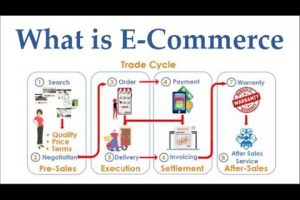
At its core, the e-commerce meaning in business goes beyond simply transacting online. It involves the entire lifecycle of digital commerce — from marketing and customer acquisition to payment processing, order fulfillment, and post-sale support. E-commerce is the digital engine that powers modern retail, wholesale distribution, and even service-based business models. When professionals define e-commerce in a business context, they are referring to a comprehensive ecosystem that integrates technology, logistics, finance, and customer experience into a seamless digital operation.
Breaking Down the Core E-Commerce Meaning
The e-commerce definition in business covers several critical dimensions that set it apart from conventional commerce:
- Digital transaction processing — Payments are authorized, captured, and settled electronically through gateways, digital wallets, or bank transfers.
- Online catalog management — Products and services are displayed, searched, and filtered through web platforms or mobile applications.
- Automated order fulfillment — Inventory is tracked, orders are routed, and shipments are coordinated using integrated software systems.
- Data-driven customer engagement — Businesses use browsing behavior, purchase history, and analytics to personalize experiences and drive repeat sales.
- Global reach without geographic barriers — Unlike brick-and-mortar stores, e-commerce businesses can serve customers across cities, countries, and continents simultaneously.

The e-commerce definition in business also includes the infrastructure that supports these activities — servers, cybersecurity protocols, APIs, CRM systems, and cloud-based databases that keep everything running smoothly behind the scenes.
Types of E-Commerce Business Models
Not all e-commerce operates the same way. Understanding the different models is essential for entrepreneurs and business leaders who want to position themselves correctly in the digital marketplace.
1. Business-to-Consumer (B2C)
This is the most familiar model. A business sells directly to individual consumers through platforms like Amazon, Shopify stores, or brand websites. B2C e-commerce definition in business focuses on consumer experience, brand storytelling, and streamlined checkout processes.
2. Business-to-Business (B2B)
Companies sell products or services to other businesses. This often involves larger order volumes, negotiated pricing, and longer sales cycles. E-commerce in B2B frequently includes bulk ordering portals, credit terms, and automated reordering systems.
3. Consumer-to-Consumer (C2C)
Individuals sell directly to other individuals through platforms such as eBay, Etsy, or Facebook Marketplace. This model thrives on peer trust, user reviews, and platform-mediated payment protection.
4. Consumer-to-Business (C2B)
In this model, individuals offer products or services to businesses. Freelancers, influencers, and content creators often operate within this framework, selling their skills, audiences, or user-generated content.
5. Direct-to-Consumer (D2C)
Brands bypass traditional retailers and sell directly to end customers through their own websites or apps. D2C e-commerce has exploded in popularity because it allows companies to control branding, capture customer data, and enjoy higher profit margins.
How E-Commerce Works in Modern Business Operations
To truly grasp the e-commerce definition in business, you need to understand the operational mechanics that make digital commerce possible. Here are the key components that power an e-commerce business:

- Front-end storefront — The website or app where customers browse, select, and purchase products. This includes product pages, search functionality, cart management, and the checkout experience.
- Payment gateway integration — Services like Stripe, PayPal, and Square process transactions securely, handling credit cards, digital wallets, and buy-now-pay-later options.
- Inventory and warehouse management — Systems like Shopify POS, TradeGecko, or custom ERPs track stock levels, manage suppliers, and coordinate fulfillment logistics.
- Order management and shipping — Orders are routed to fulfillment centers or drop-shippers, and tracking information is communicated back to the customer in real time.
- Customer relationship management — CRM platforms like HubSpot or Salesforce store customer data, manage email campaigns, and automate follow-up communications.
- Analytics and reporting — Tools like Google Analytics and Hotjar provide insights into traffic, conversion rates, customer behavior, and revenue performance.
Each of these components works together to create the digital buying experience that customers now expect. When one element fails — a slow checkout page, a broken payment integration, or inaccurate inventory data — the entire e-commerce operation suffers.
E-Commerce vs Traditional Commerce: A Side-by-Side Comparison
Understanding the e-commerce definition in business becomes clearer when you compare it to traditional commerce. The following table highlights the key differences between the two models:
| Aspect | E-Commerce | Traditional Commerce |
| Geographic Reach | Global, 24/7 availability | Limited to physical location and business hours |
| Operating Costs | Lower overhead; no physical storefront required | Higher costs for rent, utilities, and staffing |
| Customer Data | Rich behavioral data collected automatically | Limited data; relies on manual surveys or loyalty programs |
| Scalability | Easily scalable with cloud infrastructure | Requires physical expansion — new locations or larger facilities |
| Customer Experience | Personalized, self-service, and asynchronous | Face-to-face interaction; immediate gratification |
| Payment Options | Digital wallets, BNPL, crypto, cards, ACH | Primarily cash, card, and bank transfers |
| Marketing Reach | Social media, SEO, email, PPC — highly targeted | Print, radio, TV, local advertising |
The comparison above shows why more and more businesses are migrating their operations online or adopting hybrid models that combine physical and digital touchpoints. E-commerce is not replacing traditional commerce — it is redefining it.
Why E-Commerce Matters for Business Growth
The strategic importance of e-commerce in modern business cannot be overstated. Here are the primary reasons companies invest heavily in digital commerce:
- Revenue diversification — An online store opens an entirely new revenue channel that operates independently of physical location constraints.
- Lower barriers to entry — Starting an e-commerce business requires significantly less capital than opening a physical retail location, making entrepreneurship more accessible.
- Scalability — Digital platforms can handle ten customers or ten thousand without requiring proportional increases in physical infrastructure.
- Customer insights — Every click, search, and purchase generates data that businesses can use to optimize marketing, improve products, and enhance customer satisfaction.
- Competitive resilience — Businesses without a digital commerce presence risk losing market share to competitors who offer superior online shopping experiences.
Whether you are a small startup or a multinational corporation, the e-commerce definition in business applies universally. The principles remain the same: sell digitally, serve customers efficiently, and leverage data for continuous improvement.
Expert Tips for Building a Successful E-Commerce Business
If you are serious about competing in the digital marketplace, here are actionable recommendations that experienced e-commerce professionals swear by:
- Invest in mobile-first design. Over 60% of e-commerce traffic comes from mobile devices. Your storefront must load fast, navigate intuitively, and convert smoothly on smartphones and tablets.
- Prioritize site speed and Core Web Vitals. Google’s search algorithm rewards fast-loading sites. A one-second delay in page load time can reduce conversions by up to 7%.
- Implement structured data markup. Schema.org markup helps search engines understand your products, reviews, and pricing — boosting your chances of appearing in rich snippets and featured results.
- Build an email automation strategy. Abandoned cart sequences, welcome funnels, and post-purchase follow-ups consistently drive repeat purchases and increase customer lifetime value.
- Diversify your sales channels. Don’t rely solely on your website. List on marketplaces, sell through social platforms, and explore wholesale or B2B portals to maximize revenue opportunities.
- Focus on customer retention, not just acquisition. Acquiring a new customer costs five to seven times more than retaining an existing one. Loyalty programs, exclusive offers, and exceptional after-sales support pay dividends.
Frequently Asked Questions
1. What is the e-commerce definition in business in simple terms?
The simplest e-commerce definition in business is the process of buying and selling products or services over the internet. It includes everything from browsing and purchasing to payment processing and digital delivery. E-commerce eliminates the need for a physical storefront, enabling businesses to reach customers anywhere in the world at any time.
2. What are the main types of e-commerce in business?
The primary types include B2C (business-to-consumer), B2B (business-to-business), C2C (consumer-to-consumer), C2B (consumer-to-business), and D2C (direct-to-consumer). Each model serves different audiences and involves distinct transaction workflows, marketing strategies, and fulfillment processes.
3. Why is e-commerce important for small businesses?
E-commerce gives small businesses access to a global customer base without the high costs of physical retail locations. It also provides powerful tools for customer data collection, targeted marketing, and automated operations — leveling the playing field against larger competitors.
4. What does e-commerce mean for traditional retail businesses?
For traditional retailers, e-commerce represents both a competitive threat and a significant opportunity. Businesses that adopt digital commerce strategies can expand their reach, reduce overhead costs, and create omnichannel experiences that blend physical stores with online convenience. Those that ignore it risk losing relevance with digitally native consumers.
5. How does e-commerce definition in business differ from m-commerce?
While e-commerce encompasses all electronic commerce conducted via the internet, m-commerce specifically refers to transactions completed on mobile devices such as smartphones and tablets. M-commerce is a subset of e-commerce that focuses on mobile-optimized shopping experiences, app-based purchasing, and location-aware services.
Conclusion
The e-commerce definition in business is far more expansive than most people realize. It is not simply about putting products online — it is about building an entire digital ecosystem that connects businesses with customers, automates operations, and generates measurable growth. From B2B wholesale portals to D2C brand storefronts, from mobile wallets to AI-powered product recommendations, e-commerce continues to evolve at a rapid pace. Businesses that invest in understanding and implementing robust e-commerce strategies position themselves for long-term success in an increasingly digital economy. The question is no longer whether your business should participate in e-commerce — it is how quickly you can build a competitive, customer-centric digital commerce operation that delivers real results.