The moment you type e commerce definition into a search engine, you are tapping into one of the most rapidly evolving commercial landscapes in human history. E-commerce — short for electronic commerce — refers to the buying and selling of goods or services using the internet, along with the transfer of money and data to execute these transactions. While the definition sounds straightforward, the ecosystem behind it is vast, layered, and constantly transforming. Whether you are an aspiring entrepreneur, a marketing professional, or a curious consumer, understanding what e-commerce truly means is the first step toward navigating today’s digital economy with confidence and clarity.
What Is E-Commerce? The Complete Definition
At its core, the e-commerce definition encompasses any commercial transaction where the exchange of information, products, or services happens through digital channels. This includes online retail stores, digital marketplaces, subscription platforms, and even social media-based purchasing. But reducing e-commerce to a simple buying-and-selling formula misses the depth of what it represents. E-commerce is a paradigm shift in how businesses reach customers, how consumers discover products, and how value flows across global networks without geographic boundaries.
The term covers everything from a small artisan selling handmade jewelry on Etsy to multinational corporations managing billions in annual revenue through proprietary digital storefronts. Understanding the full scope of this definition helps you appreciate both its simplicity and its complexity.
Why Understanding the E-Commerce Definition Matters
You might wonder why getting the definition right is important. The truth is that e-commerce is not a monolith. It spans multiple business models, technologies, and customer journeys. When you understand the precise definition, you can:
- Identify which e-commerce model fits your business goals
- Choose the right platforms and tools for your operations
- Develop strategies that align with how digital transactions actually work
- Communicate more effectively with stakeholders, investors, and customers
- Stay ahead of emerging trends like voice commerce and social selling
Types of E-Commerce Models Explained
One of the most important aspects of the e-commerce definition is recognizing that it is not a single model. Several distinct categories describe different relationships between buyers and sellers in the digital marketplace.
1. Business-to-Consumer (B2C)
This is the model most people think of when they hear the term e-commerce meaning. A business sells products or services directly to individual consumers. Think of Amazon, Zappos, or any online fashion retailer. B2C e-commerce relies heavily on marketing, user experience design, and customer retention strategies.
2. Business-to-Business (B2B)
In B2B e-commerce, businesses sell products or services to other businesses. This could include wholesale platforms, SaaS tools, or raw material suppliers. The transaction volumes tend to be larger, and the sales cycles are often longer and more relationship-driven.
3. Consumer-to-Consumer (C2C)
This model facilitates transactions between individual consumers. Platforms like eBay, Craigslist, and Facebook Marketplace are prime examples. The e-commerce definition extends here because digital infrastructure enables trust and payment processing between strangers.
4. Consumer-to-Business (C2B)
Less common but equally significant, C2B e-commerce occurs when individuals offer products or services to companies. Freelance platforms like Upwork and influencer marketing programs fall into this category.

5. Direct-to-Consumer (D2C)
A rapidly growing subset, D2C brands bypass traditional retailers entirely and sell directly through their own websites or apps. Brands like Warby Parker and Glossier built empires on this model, leveraging digital commerce to control the entire customer experience.
Key Components of a Successful E-Commerce Business
Understanding the e-commerce definition is only half the battle. To actually operate a thriving online business, you need to master several interconnected components that make digital transactions possible and profitable.
- E-Commerce Platform: The software backbone that powers your online store. Shopify, WooCommerce, and BigCommerce are popular choices.
- Payment Gateway: The technology that securely processes transactions. Stripe, PayPal, and Square are industry standards.
- Inventory Management System: Tools that track stock levels, orders, and fulfillment in real time.
- Customer Relationship Management (CRM): Software that helps you manage customer data, interactions, and personalization.
- Digital Marketing Infrastructure: SEO, email marketing, social media advertising, and content strategies that drive traffic and conversions.
- Logistics and Fulfillment: Warehousing, shipping partnerships, and returns processing that deliver the physical product to the customer.
Each of these components plays a critical role. Neglect even one, and your electronic commerce operation can suffer from poor conversion rates, inventory mismatches, or customer dissatisfaction.
E-Commerce vs. Traditional Commerce: A Side-by-Side Comparison
To truly grasp the e-commerce definition, it helps to compare it directly with traditional brick-and-mortar commerce. The table below highlights the most significant differences.
| Feature | E-Commerce | Traditional Commerce |
| Operating Hours | 24/7 availability | Limited by store hours |
| Geographic Reach | Global audience | Local or regional |
| Overhead Costs | Lower (no physical storefront) | Higher (rent, utilities, staffing) |
| Customer Reach | Unlimited digital traffic potential | Dependent on foot traffic |
| Inventory Management | Automated and integrated | Often manual or semi-automated |
| Personalization | Data-driven recommendations | Limited by human interaction |
| Payment Methods | Digital wallets, cards, BNPL | Cash, card, check |
| Scalability | Highly scalable with minimal added cost | Requires physical expansion |
The comparison makes it clear why electronic commerce has become the dominant force in retail. However, traditional commerce still holds value for businesses that rely on tactile experiences, immediate product access, and in-person customer service. The smartest brands often blend both approaches into an omnichannel strategy.
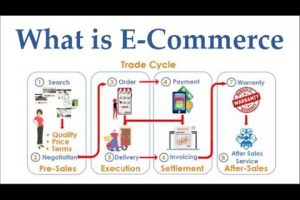
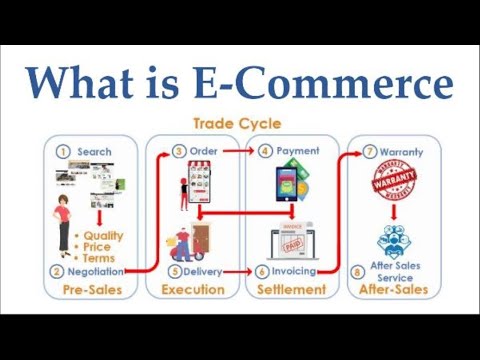
How E-Commerce Works: The Process Behind Every Transaction

Understanding the mechanics of what e-commerce really means requires looking at the journey a transaction takes from start to finish. When a customer clicks “Buy Now” on an online store, a complex sequence of events unfolds behind the scenes.
- The customer browses the website and selects a product, adding it to their virtual cart.
- The e-commerce platform calculates the total, including taxes, shipping, and any applicable discounts.
- The customer proceeds to checkout and enters payment and shipping information.
- The payment gateway securely transmits the transaction data to the payment processor and the customer’s bank.
- The bank authorizes or declines the transaction.
- If approved, the order confirmation is generated, and the inventory system is updated in real time.
- The fulfillment team picks, packs, and ships the product.
- The customer receives tracking information and, eventually, the delivered product.
- Post-purchase follow-up, including feedback collection and review requests, completes the cycle.
This process happens in seconds, but the infrastructure supporting it is remarkably sophisticated. Each step involves integration between databases, APIs, third-party services, and logistics networks that define the modern e-commerce definition.
Expert Tips for Thriving in Electronic Commerce
If you are building or scaling an online business, these expert recommendations can help you navigate the competitive landscape effectively.
- Prioritize mobile experience. Over 60% of e-commerce traffic comes from mobile devices. A slow or poorly designed mobile site will cost you sales.
- Invest in SEO from day one. Organic search drives significant traffic to online stores. Target long-tail keywords related to your niche to capture high-intent buyers.
- Build trust signals. Customer reviews, secure payment badges, clear return policies, and transparent pricing reduce friction and increase conversions.
- Leverage email marketing. Abandoned cart sequences, personalized recommendations, and loyalty programs consistently deliver strong ROI in digital commerce.
- Analyze your data relentlessly. Use analytics tools to track customer behavior, identify bottlenecks in the sales funnel, and optimize every touchpoint.
- Diversify your sales channels. Don’t rely on a single platform. Expand to marketplaces, social commerce, and even wholesale channels to reduce risk.
These tips come from years of observing what separates thriving online retail businesses from those that struggle to gain traction. Consistency, data-driven decision-making, and customer-centricity remain the pillars of success.
Frequently Asked Questions About E-Commerce
What is e-commerce in simple terms?
E-commerce, or electronic commerce, is the buying and selling of goods and services over the internet. It encompasses the entire process from product discovery and browsing to payment processing and delivery, all conducted through digital channels rather than physical stores.
What are the four main types of e-commerce?
The four primary models are Business-to-Consumer (B2C), Business-to-Business (B2B), Consumer-to-Consumer (C2C), and Consumer-to-Business (C2B). Each describes a different relationship between the parties involved in a digital transaction, and each has unique characteristics in terms of scale, complexity, and customer interaction.
How do I start an e-commerce business with no experience?
Start by choosing a niche, selecting an e-commerce platform like Shopify or WooCommerce, and setting up a store with a few curated products. Focus on learning basic digital marketing, building a social media presence, and providing exceptional customer service. Many successful entrepreneurs started with minimal experience but invested time in learning the fundamentals of electronic commerce operations.
What is the difference between e-commerce and e-business?
While the terms are often used interchangeably, there is a meaningful distinction. E-commerce specifically refers to the buying and selling of products and services online. E-business is a broader concept that encompasses all business operations conducted digitally, including supply chain management, customer service, internal communications, and more. In short, e-commerce is a subset of e-business.
What are the biggest challenges in e-commerce today?
The most significant challenges include intense competition, rising customer acquisition costs, cybersecurity threats, supply chain disruptions, and the need to deliver seamless omnichannel experiences. Businesses that succeed in digital commerce are those that address these challenges proactively through technology investment, data analysis, and strategic differentiation.
Is e-commerce still profitable in 2024 and beyond?
Absolutely. Global e-commerce sales continue to grow year over year, with projections indicating that online retail will account for a significant and increasing share of total retail transactions. Profitability depends on execution — choosing the right niche, managing costs effectively, and building genuine customer relationships are what separate profitable ventures from those that struggle.
Conclusion: Embracing the Full Scope of E-Commerce
The e-commerce definition is far more than a dictionary entry. It represents a fundamental transformation in how commerce operates worldwide. From the earliest days of online retail in the mid-1990s to today’s sophisticated ecosystems powered by artificial intelligence, augmented reality, and predictive analytics, electronic commerce continues to redefine what is possible for businesses of every size.
If you are just beginning your journey into digital commerce, start with the fundamentals: understand the models, master your platform, and obsess over your customer’s experience. If you are already operating an online store, look for opportunities to innovate — whether through new sales channels, emerging technologies, or deeper personalization. The digital marketplace rewards those who stay curious, adaptable, and relentlessly focused on delivering value. The world of e-commerce is vast, dynamic, and full of opportunity. The best time to engage with it was years ago. The second-best time is right now.