
If you are in the market for a new truck, the sheer number of options available can feel overwhelming. Whether you need a workhorse for hauling equipment, a family-friendly full-size pickup, or a fuel-efficient compact truck for daily commuting, understanding what to look for makes all the difference. This comprehensive best trucks buying guide breaks down everything you need to know — from towing capacity and payload ratings to fuel economy, technology features, and total cost of ownership — so you can make a confident, informed purchase.
Why Choosing the Right Truck Matters
Buying a truck is not like picking out a sedan. Trucks serve dramatically different purposes depending on your lifestyle, profession, and recreational needs. A light-duty truck built for suburban commuting will feel entirely different behind the wheel of a heavy-duty work truck designed for towing 14,000 pounds of trailer. Choosing the wrong configuration can lead to overspending on features you never use, or worse, buying a truck that cannot handle your actual workload. This guide ensures you align your purchase with real-world needs rather than marketing hype.
Key Factors to Consider When Buying a Truck

Before you visit a dealership or browse online listings, familiarize yourself with these critical decision points.
1. Truck Class and Size
Trucks fall into several categories, and understanding them is the foundation of any smart buying decision.
- Compact/Mid-Size Trucks: Think Honda Ridgeline, Toyota Tacoma, Chevrolet Colorado. Ideal for daily driving, light towing, and urban maneuverability.
- Full-Size Light-Duty: Ford F-150, Ram 1500, Chevrolet Silverado 1500, GMC Sierra 1500. The best all-around trucks for most buyers.
- Heavy-Duty: Ford F-250/F-350, Ram 2500/3500, Chevrolet Silverado 2500/3500, GMC Sierra 2500/3500. Built for serious towing and payload demands.
2. Towing and Payload Capacity
Towing capacity and payload ratings are arguably the most important specs. Maximum towing numbers are impressive but often assume optimal configurations. Always check the payload capacity — the actual weight the truck can carry in the bed and cabin — because this determines what you can realistically haul.
3. Engine and Drivetrain Options
Modern trucks offer a wide range of powertrains:

- V6 engines — Balanced fuel economy and decent power for light-duty tasks.
- V8 engines — Classic torque and towing muscle, common in full-size trucks.
- Turbo I4 engines — Increasingly popular for their efficiency without sacrificing capability.
- PowerBoost Hybrid and diesel options — Offer the best of both worlds: fuel savings with strong low-end torque.
Consider two-wheel drive (2WD) versus four-wheel drive (4WD) based on your climate and terrain. Four-wheel drive adds significant capability and resale value but comes with a cost premium and reduced fuel economy.
4. Bed Size and Cab Configuration
The cab-and-bed combination directly impacts usability:
- Regular cab with standard bed: Maximum bed length, minimal passenger space.
- Extended cab or Club cab: Small rear jump seats or suicide doors with a moderate bed.
- Crew cab with short bed: Best for families who still need a functional truck bed.
- Crew cab with long bed: Maximum utility and passenger room, but the longest overall vehicle length.
5. Fuel Economy and Total Cost of Ownership
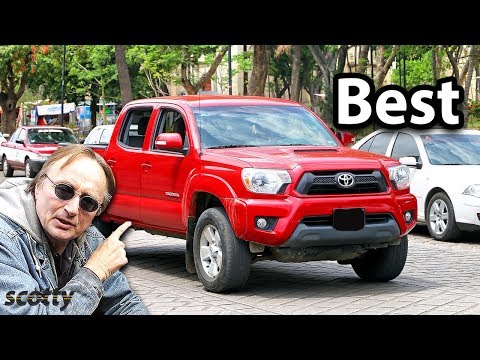
Trucks are not known for sipping fuel, but modern engineering has closed the gap significantly. Consider annual fuel costs, insurance premiums, maintenance schedules, and depreciation rates when calculating long-term ownership costs. A truck with strong resale value — such as the Toyota Tacoma or Ford F-150 — can save you thousands of dollars over time.
Best Truck Categories at a Glance
The table below compares the leading trucks across key performance and capability metrics so you can quickly narrow your options.
| Truck Model | Class | Max Towing (lbs) | Engine Options | Fuel Economy (est. mpg) | Starting Price |
| Ford F-150 | Full-Size Light-Duty | 13,500 | V6, V8, Hybrid, Turbo I4 | 20-24 | $36,000 |
| Ram 1500 | Full-Size Light-Duty | 12,750 | V6, V8, EcoDiesel | 19-23 | $38,000 |
| Chevrolet Silverado 1500 | Full-Size Light-Duty | 13,300 | V6, V8, Turbo I4 | 19-24 | $36,000 |
| Toyota Tacoma | Mid-Size | 6,400 | I4, V6 | 19-22 | $30,000 |
| Ford F-250 Super Duty | Heavy-Duty | 20,000 | V8 Turbo Diesel, Gas V8 | 15-19 | $44,000 |
| Ram 2500 | Heavy-Duty | 19,780 | V8, Turbo Diesel I6 | 15-18 | $43,000 |
Best Trucks for Every Budget
Under $35,000 — Value Picks
Budget-conscious buyers have excellent options. The Toyota Tacoma remains the mid-size benchmark for reliability and resale value. The Chevrolet Colorado offers a surprising diesel engine option in this price range. The Ford Ranger has been refreshed with modern tech and strong V6 performance, making it a compelling entry point into truck ownership.
$35,000–$55,000 — Best Overall Range
This is the sweet spot for most buyers. The Ford F-150 dominates with its extensive trim levels, engine variety, and advanced technology packages. The Ram 1500 stands out for its luxurious interior and available air suspension. The Chevrolet Silverado 1500 offers strong towing and a refined ride quality that competes closely with its rivals.
Over $55,000 — Premium and Heavy-Duty
If you need maximum capability or premium refinement, consider the Ford F-150 Raptor for off-road performance, the Ram 1500 Limited for luxury, or any of the Super Duty models — Ford F-250, Ram 2500, Chevrolet Silverado 2500 — for serious hauling and towing workloads. The GMC Sierra Denali also earns its place here with upscale materials and a distinctive Multipro tailgate design.
New vs. Used — Which Is Right for You?
Buying a new truck gives you the latest safety features, factory warranty coverage, and the latest infotainment technology. However, new trucks depreciate quickly — often losing 20–30% of their value in the first three years. A used truck between two and four years old can offer substantial savings while still providing modern features and remaining under the original powertrain warranty. Certified pre-owned programs from Ford, Ram, Chevrolet, and Toyota add an extra layer of peace of mind.
Expert Tip: Inspect Before You Buy
When purchasing a used truck, always request a vehicle history report (Carfax or AutoCheck), inspect for frame rust — especially in northern climates where road salt is prevalent — and have an independent mechanic perform a pre-purchase inspection. Trucks that were used for towing or hauling heavy loads may have accelerated wear on the suspension, transmission, and brakes.
Technology and Safety Features Worth Paying For
Modern trucks are rolling technology platforms. When comparing trim levels, prioritize these features:
- Adaptive Cruise Control — Essential for long highway hauls and reducing driver fatigue.
- 360-Degree Camera Systems — Invaluable for maneuvering a large vehicle in tight spaces.
- Blind Spot Monitoring with Trailer Coverage — Critical if you regularly tow a trailer or fifth wheel.
- Apple CarPlay and Android Auto — Now standard on nearly all 2024 and newer models.
- ProPower Onboard Generator — Available on select Ford F-150 trims, this feature turns your truck into a mobile power station for jobsites or camping trips.
- Automatic Emergency Braking — A must-have safety feature that can prevent costly collisions.
Common Mistakes Truck Buyers Make
- Overbuying capability: If you never tow more than 2,000 pounds, a heavy-duty truck with a diesel engine is overkill and will cost you more in fuel and maintenance.
- Ignoring total ownership cost: Purchase price is only part of the equation. Factor in insurance, fuel, tires, and maintenance over your planned ownership period.
- Skipping the test drive: Trucks handle very differently from one another. The Ram 1500 rides smoother than a Ford F-150; the Toyota Tacoma handles more tightly than a Silverado. A test drive reveals what specifications never will.
- Not negotiating the right way: Focus negotiations on the out-the-door price rather than monthly payments. Dealers can manipulate monthly figures to hide the true cost of the vehicle.
- Forgetting to check incentives: Manufacturer rebates, loyalty discounts, and military appreciation programs can save you thousands of dollars. Always check the manufacturer’s website before finalizing a deal.
Conclusion
The best truck buying guide comes down to matching the right vehicle to your actual needs rather than chasing the highest towing numbers or flashiest trim. Define your primary use case first — commuting, work duties, recreational hauling, or family transportation — then narrow your search to the truck class, engine, and drivetrain that support that lifestyle. Use the comparison data and expert tips in this guide to walk into any dealership prepared, confident, and ready to drive home the truck that truly fits.
Frequently Asked Questions
What is the most reliable truck for the money?
The Toyota Tacoma consistently ranks as the most reliable truck for the money. It holds its value exceptionally well, requires minimal maintenance, and has a proven track record spanning multiple generations. The Ford F-150 and Ram 1500 are also strong contenders in the full-size category, particularly when buyers choose well-reviewed engine and trim combinations.
Which truck has the best towing capacity?
Among current production models, the Ford F-150 SuperCrew with the 3.5L EcoBoost V6 can tow up to 13,500 pounds in its highest configuration. For heavy-duty applications, the Ram 3500 with the 6.7L Cummins Turbo Diesel leads the class with a maximum towing capacity of approximately 37,000 pounds when properly equipped with the appropriate hitch and trailer package.
Should I buy a diesel or gas truck?
Diesel trucks deliver superior low-end torque and better fuel economy for sustained hauling and towing, making them ideal for buyers who regularly pull heavy trailers. However, diesel engines carry a higher purchase price, costlier maintenance, and Diesel Exhaust Fluid (DEF) requirements. For buyers who do not tow frequently or need maximum payload, a modern gasoline or hybrid truck offers excellent value and lower long-term costs.
What is the best compact truck for a first-time truck buyer?
The Toyota Tacoma and Chevrolet Colorado are the top recommendations for first-time truck buyers. Both are mid-size trucks that are easier to park, more affordable than full-size models, and deliver respectable capability. The Tacoma edges ahead for reliability and resale value, while the Colorado offers a unique diesel engine option that adds versatility for buyers who need more pulling power.
How much should I spend on my first truck?
A reasonable budget for a first truck is between $30,000 and $45,000 out-the-door for a new model. This range covers the majority of mid-size and full-size light-duty trucks with mid-level trim packages that include essential safety and technology features. Avoid stretching your budget beyond 15% of your gross monthly income on a vehicle payment to maintain healthy financial flexibility.